Most small businesses do not choose voicemail because it is ideal. They choose it because it is familiar.
It has been the default backup for missed calls for years. If no one can answer, the caller hears a message, leaves their details, and someone calls back later. On paper, that sounds reasonable.
But in practice, voicemail often creates more delay than direction.
That is why more business owners are starting to compare AI receptionist vs voicemail more seriously. Not because they want something flashy, but because they are realizing that missed calls are not just missed moments. They are missed opportunities.
The real question is not whether voicemail still "works" in a technical sense. The real question is this: Which option actually helps a lead move forward when your team cannot answer right away?
Why This Comparison Matters
When a lead calls your business, they are usually trying to do something simple. They want to ask a question, check availability, understand the next step, or decide whether to move forward.
If no one answers, that moment becomes fragile. The person is already in motion. They may be comparing providers, solving an urgent problem, or acting during a short window of time.
A weak backup system does not just delay the conversation. It weakens intent. That is why voicemail vs answering service is not a small operational choice. It affects how many leads stay engaged long enough to become real conversations.
What Voicemail Actually Does
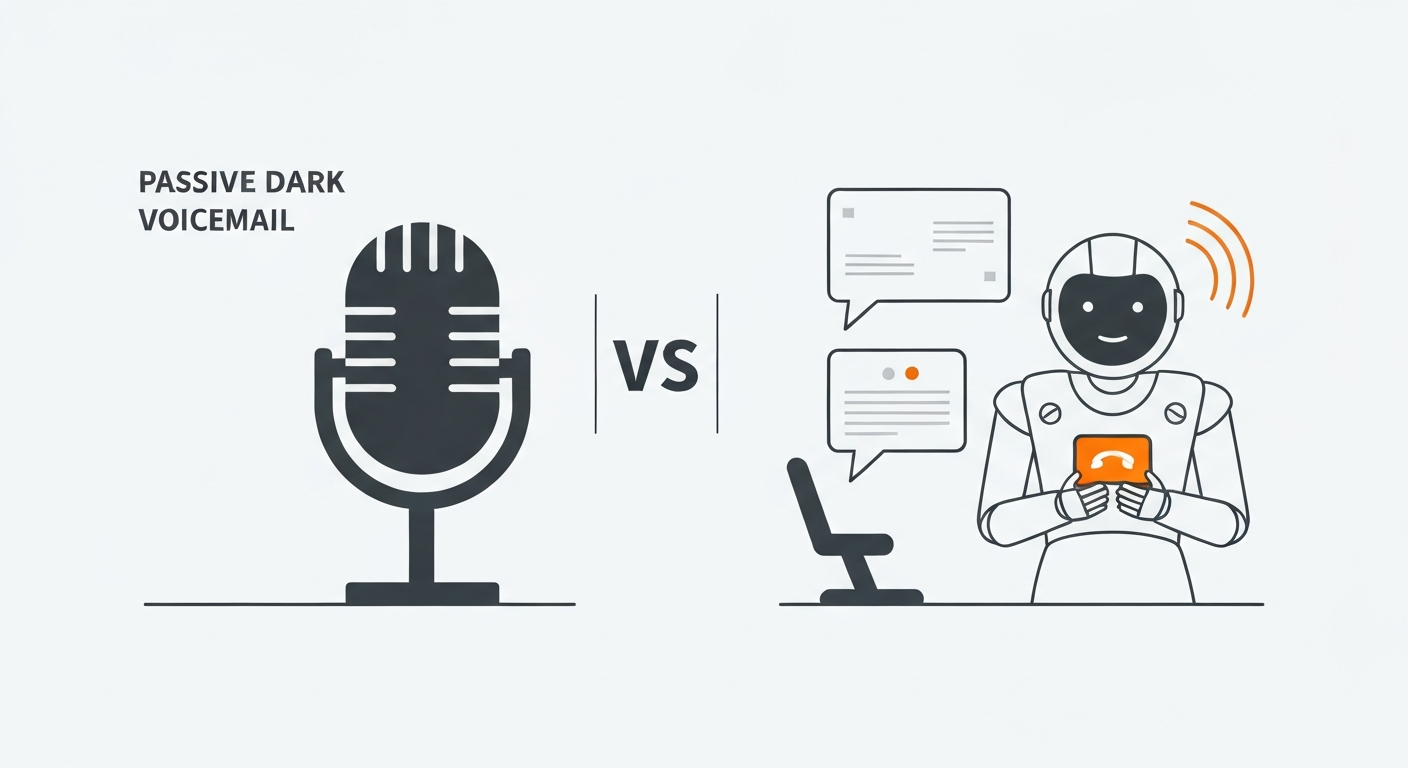
Voicemail is passive. It tells the caller: no one is available, leave a message, wait for a callback. That is its whole structure.
For the business, voicemail feels like coverage because something is there when the phone is not answered. For the caller, it often feels like uncertainty. They do not know when they will hear back, whether their message was clear enough, whether they should wait or keep looking, or whether calling this business will be easy or frustrating.
This is the core weakness of voicemail. It records the missed moment, but it does not do much to recover it.
What an AI Receptionist Does Differently
An AI receptionist is active rather than passive. Instead of ending the interaction at the missed call, it keeps the first-contact moment moving.
Depending on the setup, it can answer the call, acknowledge the person immediately, gather basic information, clarify what they need, guide them toward the next step, and support booking or handoff when appropriate.
This does not mean it replaces human care. It means it gives the lead a path instead of a pause. Voicemail says, "Leave a message." An AI receptionist says, "Let's move this forward."
Where Voicemail Breaks Down
1. The caller does not leave a message. This is more common than many owners think. A lot of people hang up as soon as they hear voicemail. They do not want to explain themselves. They do not want to wait. So the business never even gets the chance to follow up.
2. The message is incomplete. Even when a caller leaves a message, it may be missing important context. The name is unclear. The number is rushed. The reason for the call is vague. Now the business has to call back without much information, which slows things down further.
3. The callback happens too late. By the time someone checks voicemail, returns the call, and reaches the person, the lead may already be colder. They may have solved the issue elsewhere or simply lost momentum.
4. There is no real next step. Voicemail does not guide. It does not qualify. It does not book. It does not clarify what happens next. It simply stores the interruption and waits for someone else to rescue it later.
Why This Matters More After Hours
The weaknesses of voicemail become even more obvious outside normal business hours. When someone calls in the evening or on a weekend, voicemail often becomes the only thing standing between the business and the inquiry. That means the lead hears a message and enters a waiting period with no clear movement.
This is where after-hours call handling becomes so important. A lead who reaches out at 7:30 p.m. may be highly motivated in that moment. By the next morning, that motivation may be weaker. An AI receptionist helps bridge that gap by turning after-hours contact into an actual first interaction instead of a dead end.
The Emotional Difference for the Caller
This part matters more than many systems conversations acknowledge.
Voicemail feels like: nobody is here; I have to try again later; I am not sure what happens next.
A strong AI receptionist experience feels more like: I reached the right place; my inquiry is being handled; I can move forward; I know what comes next.
That emotional difference shapes trust. And trust starts earlier than the sales call. It often begins the moment the business either feels easy to engage with or difficult to reach.
When Voicemail Is Still Fine
To be fair, voicemail is not always useless. It may still be acceptable when call volume is very low, inquiries are not time-sensitive, the business responds extremely quickly to every message, there is little competition, or the owner is still managing everything personally and consistently.
But as soon as any of those conditions change, voicemail becomes more fragile. If calls are frequent, if leads compare multiple options, if the owner is overloaded, or if missed-call follow-up is inconsistent, voicemail stops being a sufficient backup. At that point, it is no longer just "simple." It is expensive.
When an AI Receptionist Makes More Sense
An AI receptionist tends to make more sense when missed calls happen regularly, callers often do not leave messages, after-hours inquiries matter, the team cannot answer consistently, slow callbacks are costing momentum, the owner is tired of being the manual rescue system, and the business wants a better front-door process without hiring a full-time front-desk role immediately.
In those situations, the choice is not really about modernizing for the sake of it. It is about building a response layer that protects real demand.
The Bigger Difference: Delay vs Continuity
This is the clearest way to frame the comparison. Voicemail creates delay. An AI receptionist creates continuity.
Voicemail interrupts the lead's motion and asks them to wait. An AI receptionist keeps the interaction alive long enough for the business to guide, capture, or route the inquiry properly. That continuity is what helps preserve more leads.
Common Objections Business Owners Have
"Voicemail is simpler." Yes. But simple is not always effective. Something can be familiar and still be weak.
"I don't want the business to feel robotic." That is a fair concern. But the better comparison is not between "human warmth" and "technology." It is between silence and structure, uncertainty and guidance, callback delay and immediate response.
"We can just call people back." You can. The question is whether that happens fast and consistently enough to protect intent.
What Small Businesses Should Really Measure
When deciding between AI receptionist vs voicemail, do not just ask which is cheaper or more familiar. Ask: How many missed calls become real conversations? How often do callers leave messages? How fast does follow-up actually happen? What happens after hours? How often does someone have to manually rescue the lead? How many inquiries likely disappear before a callback happens?
Those questions reveal the true cost of voicemail much more clearly than the phone bill does.
Final Thought
The real comparison between an AI receptionist and voicemail is not about old versus new. It is about passive coverage versus active response.
Voicemail can collect a message. An AI receptionist can help carry the interaction forward. That difference matters when a lead is deciding whether to stay engaged, keep waiting, or move on to someone else.
If your business is losing momentum between the missed call and the callback, voicemail may not actually be protecting your leads. It may just be documenting the gap. And once that becomes clear, the better next step is not more pressure on the team. It is a stronger front door.