
In short
- A missed call isn't a lost customer. A voicemail with no next step is.
- Your greeting should say what to leave and when messages are checked — only if that's true.
- One named person checks it. One person covers when they can't.
What a caller hears today
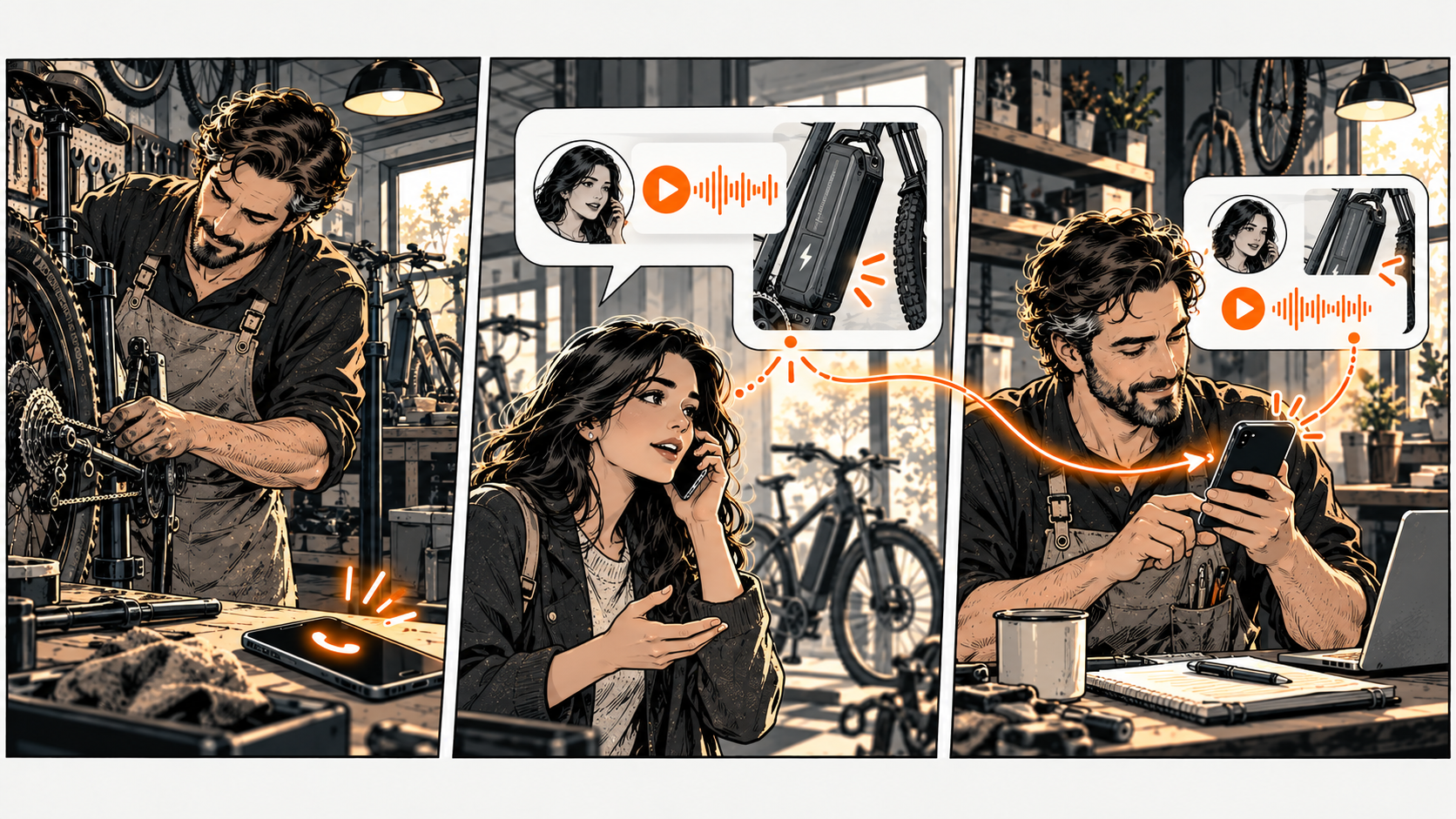
Example scenario: a bike repair owner can't answer mid-repair. The voicemail says only "Leave a message." The caller wants to know if the shop fixes electric bikes. They don't know what to include, or whether anyone checks the mailbox — so they call the next shop.
Step 1 — Listen to your own line
Make a test call (one that won't reach a real customer or an emergency service). Check: the number reaches the right business, the greeting is clear, the mailbox isn't full, and the hours match your website and DiagBizCard.
Step 2 — Give the caller enough to act
A greeting that works asks for three things and makes one honest promise:
"You've reached [Business]. We're with a customer right now. Please leave your name, callback number, and a short description of what you need — for example, your bike type and the repair. We check messages during our posted hours, [hours]."
Only mention email or a form if someone actually checks it — a second abandoned channel doesn't fix the first. Keep sensitive details out, and don't make an ordinary mailbox sound like emergency coverage.
Step 3 — Give the callback an owner
Decide who checks messages and who covers when they're away. Keep a small private list: call, who's responsible, answered yes/no. Never publish caller details.
The Missed Call Recovery Check
Copy these five lines into your notes for one real situation. No signup needed.
- Number — Does the public number reach the right business?
- Greeting — What does it ask the caller to leave?
- Promise — When do you say messages are checked (and is that true)?
- Owner — Who checks today?
- Backup — Who covers if they can't?
FAQ
Do I need a new phone system?
No. Start with the greeting and who owns the callback.
What if I can't promise a same-day return?
Say the real window — honesty beats a broken "we'll call right back."